
A customer contacts a landscape lighting business: “We’d like to add lights to the garden.”
A useful first call could explore how the family uses the space, what they want to highlight, and which areas need a closer look. The owner’s experience helps turn a general request into a practical discussion.
It helps to arrive with some context already in hand.
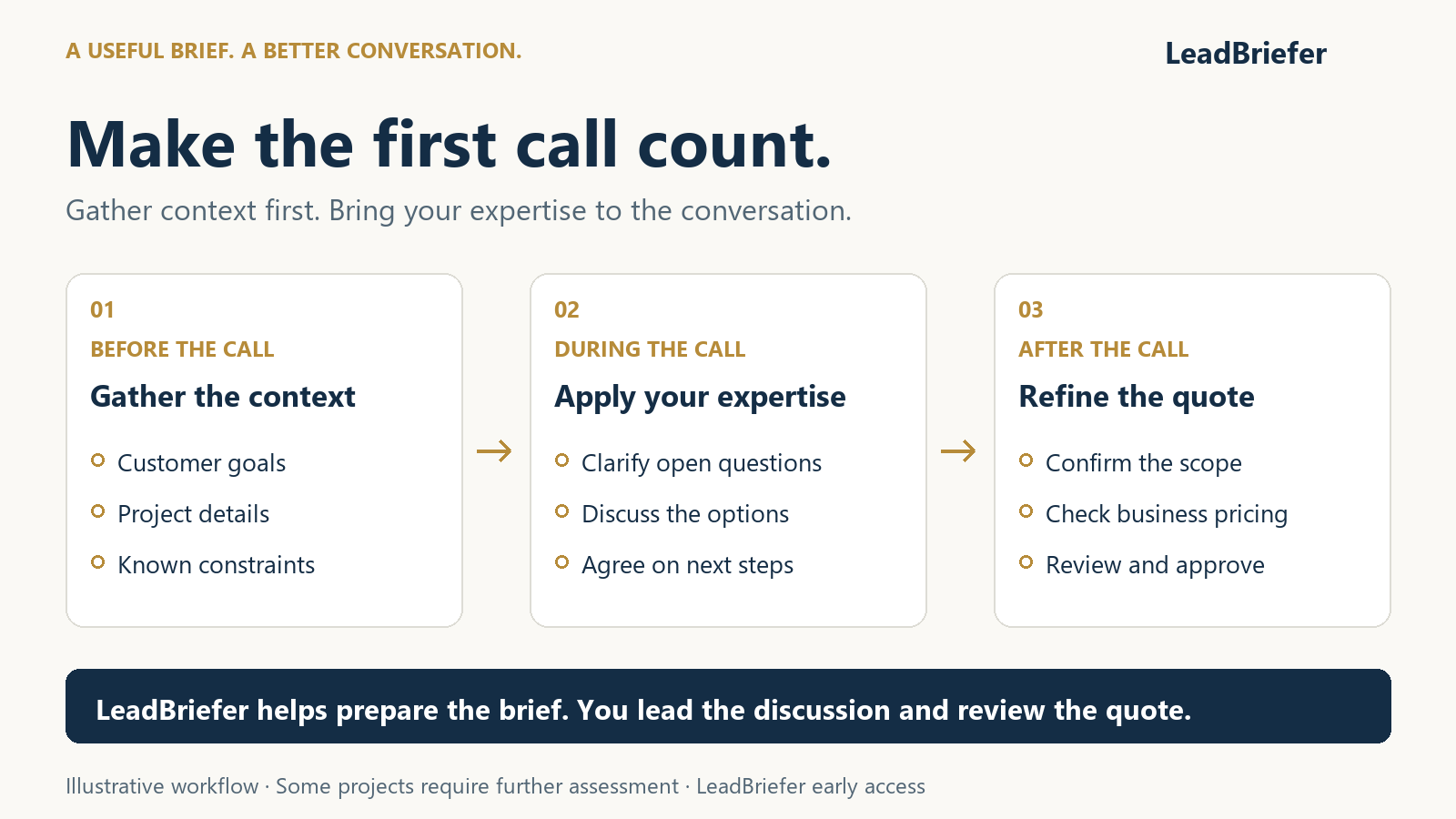
LeadBriefer is being built to support that preparation: a natural chat gathers relevant details using the business’s information, giving the owner a brief to review before a conversation.
Start the call with an understanding of the request
A new inquiry often begins with a short description. The customer knows what prompted them to get in touch, but may need help explaining the details that matter to the business.
For the lighting project, that could include the areas they want to illuminate, whether they are thinking about paths or seating areas, and what they hope to achieve.
If those details are available before the call, the owner can read them, identify gaps, and prepare useful follow-up questions.
The conversation then has a starting point. The owner can acknowledge what the customer has already shared and explore the decisions that need professional input.
This lighting scenario is illustrative. A site assessment may still be necessary before the business can determine a suitable approach and reliable price.
Let the initial conversation follow the customer’s situation
The owner provides LeadBriefer with information about the business’s services, pricing, intake requirements, and the details needed to prepare a quote.
LeadBriefer uses that context to determine relevant questions as the customer explains the request. The owner does not need to script every question.
For example, “We want lighting along a garden path” calls for different clarification from “We need lighting for an outdoor entertaining area.”
The aim is to gather information that helps the business understand the job. A requested deadline is something to review. A customer’s description is a starting point to assess. Details that still need confirmation remain part of the discussion.
Use the first human conversation to apply your expertise
Once the owner has reviewed the brief, the call can develop the request further.
That might mean explaining service options, checking an assumption, discussing a constraint, or identifying what an assessment needs to establish.
The owner can also confirm that they have understood the customer correctly:
Owner: “You mentioned the path and the seating area. Which matters most for the first stage?”
That question builds on the information already gathered. It gives the customer a chance to clarify priorities and helps the owner understand how to approach the work.
Preparing for the call also helps reveal what is still unknown. The business can decide which issues to discuss and which require further assessment.
The same preparation can help across service businesses
The details vary with the service, but the value of arriving prepared applies broadly.
- Landscape lighting: An initial chat could establish the areas involved, the customer’s goals, and whether the project relates to an existing or planned garden. The owner can use the call to discuss priorities and the next assessment step.
- Event audiovisual services: A customer could describe the venue, audience size, event format, and requested support. The provider can then discuss what needs confirmation with the venue and what the proposed service should cover.
- Corporate language training: A business could explain the number of learners, their goals, approximate experience levels, and preferred delivery format. The trainer can use the call to clarify learning needs and discuss an appropriate proposal.
These are illustrative examples, not a fixed list of supported industries. The approach can suit on-site, remote, digital, and hybrid services that need customer details to prepare a quote.
Carry the understanding into the quote
The call may change the proposed scope. A customer might clarify a priority, add a requirement, or discover that a different service better fits the request.
Those decisions need to be reflected in the quote the business prepares.
LeadBriefer supports quote preparation using the business’s context and pricing. The owner checks the gathered information, accounts for what was clarified, reviews the proposed scope and price, and makes adjustments before approval.
The judgment stays with the business. A useful brief prepares the ground for that judgment; further discussion develops it.
Give the conversation a useful starting point
For work that needs a call, the first conversation is an opportunity to listen carefully and help the customer decide what comes next.
LeadBriefer’s role begins earlier, helping the customer explain the request through the business’s public page and AI chat.
Review the brief. Identify what needs your attention. Bring your expertise to the conversation. Then use the clearer understanding to refine and review the quote.